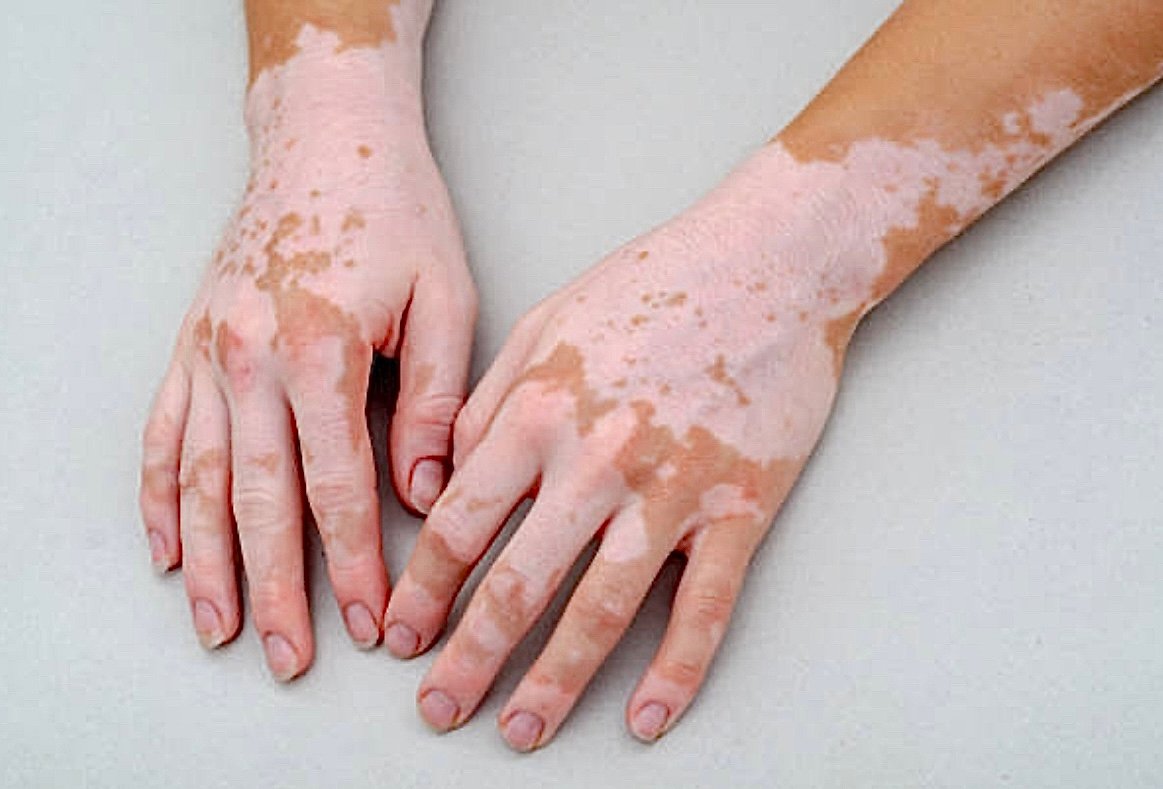
Vitiligo causes parts of your skin to lose color, leaving pale patches that can appear anywhere on the body. We will explain what vitiligo is, why it happens, and the practical steps you can take to manage it so you feel more in control of your skin and choices.
We will look at how the immune system and other factors can lead to pigment loss, how vitiligo often starts and spreads, and what treatment and care options are realistic for daily life. This article will guide us through clear facts, common treatments, and everyday strategies to protect skin and support well-being.
Understanding Vitiligo
We explain what vitiligo is, how it shows up on the body, and what happens inside the skin to cause pigment loss. The next parts describe types, common signs, and the biological process behind the condition.
Definition and Types
Vitiligo is a long-lasting skin condition in which patches of skin lose their pigment. The patches appear as smooth, white areas on the skin and can affect hair and the inside of the mouth. We note that pigment comes from melanocytes, the cells that make melanin.
Major types include:
- Nonsegmental (generalized): Symmetrical patches that often appear on both hands, both knees, or both sides of the face.
- Segmental: Rapid pigment loss confined to one area or one side of the body, usually stabilizing after several months.
- Focal: A few isolated spots in one area.
- Universal: Most or all of the body loses pigment.
We point out that nonsegmental vitiligo is the most common form and that onset can occur at any age. Treatments and outlook differ by type, so proper classification guides care.
Common Symptoms
The main symptom is clearly defined white patches on the skin. These patches often start on the hands, face, feet, forearms, and around body openings like the mouth and eyes.
Other signs include:
- Premature whitening or graying of the hair on the scalp, eyelashes, or beard.
- Loss of color inside the mouth and nose.
- Patches that may grow larger over months or years, though growth rates vary.
We note that the patches are usually not painful or itchy, but some people report mild discomfort. The condition can be unpredictable: some patches spread, some stay the same, and others regain pigment, especially with treatment.
How Vitiligo Develops
Vitiligo develops when melanocytes are damaged or stop working, so the skin stops producing melanin. Research shows an autoimmune process is a common cause: the body’s immune system mistakenly attacks melanocytes.
Contributing factors can include:
- Genetic predisposition: family history increases risk.
- Environmental triggers: skin injury, sunburn, or stress may prompt new patches.
- Other autoimmune conditions: thyroid disease, type 1 diabetes, and pernicious anemia are seen more often in people with vitiligo.
We explain that inflammation and oxidative stress in the skin may also play roles. The exact mix of triggers varies by person, which is why symptoms and progression differ between patients.
Causes and Management of Vitiligo
We explain why vitiligo starts, who is more likely to get it, how doctors treat it today, and what people can do to live with the condition day to day.
Underlying Causes and Risk Factors
We know vitiligo occurs when melanocytes — the cells that make skin pigment — are damaged or stop working. Immune system activity often plays a major role: autoimmunity makes the body attack melanocytes. Genetic factors also matter; having a close relative with vitiligo raises risk.
Common risk factors include family history, other autoimmune diseases (like thyroid disease), and onset before age 20. Stress, skin injury (Koebner phenomenon), and sunburns can trigger or worsen patches. Vitiligo usually appears symmetrically, often on hands, face, and around body openings. We recommend telling a clinician about personal and family autoimmune history during evaluation.
Current Treatment Options
We aim to stabilize pigment loss and restore color when desired. Main medical options include topical corticosteroids and topical calcineurin inhibitors. These reduce local immune activity and can help small or recent patches repigment.
For larger or resistant areas, narrowband UVB phototherapy is common. It stimulates melanocyte activity and can produce significant repigmentation over months. Oral or topical immunosuppressants (used carefully) and short courses of systemic steroids may be used to halt rapid progression.
Surgical grafting (skin grafts or melanocyte transplants) suits stable, non-spreading vitiligo. Camouflage cosmetics and depigmentation of remaining pigment are nonmedical options to match skin tone. We always weigh benefits, side effects, and patient goals when choosing treatments.
Emerging Research and Innovations
We track new targeted therapies and lab advances. Janus kinase (JAK) inhibitors, used as pills or topical creams, have shown promise in restoring pigment by blocking inflammatory pathways that damage melanocytes. Early trials report repigmentation when combined with light therapy.
Research also explores cell-based transplants and stem-cell techniques to replace lost melanocytes. Gene studies aim to identify risk alleles and pathways, which could lead to preventive strategies. Trials continue on safer long-term immune-modulating drugs.
We caution that many innovations remain experimental. Access, cost, and side effects vary, so we advise patients to discuss trial eligibility and realistic expectations with specialists.
Living With Vitiligo
We focus on practical steps for daily life and mental well-being. Sun protection is essential: use broad-spectrum sunscreen, wear protective clothing, and treat burned areas promptly. Sunscreen prevents contrast between pigmented and depigmented skin and lowers skin cancer risk on sun-exposed areas.
Cosmetic options include tinted moisturizers, concealers, and medical-grade pigments for more durable coverage. Support groups and counseling help manage stress, self-image, and social reactions. Regular skin exams and coordination with specialists for other autoimmune conditions complete routine care.
We encourage realistic goals: some treatments take months, and responses vary by body site. Shared decision-making with clinicians helps set priorities and choose manageable strategies.
Conclusion
Vitiligo is a complex but manageable condition. Understanding its causes, patterns, and treatment options empowers individuals to make informed choices about care and lifestyle. With medical support, protective habits, and emotional care, many people successfully manage vitiligo and maintain confidence and well-being.
For more related topics, Explore Here: Diseases & Disorders